Source HDPE Lotion Plastic Bottle for Skin Care, Cosmetics, Shampoo
Compare 30 HDPE Lotion Plastic Bottle options from Jiangsu, Zhejiang, and Guangzhou suppliers. Buyers can review capacities from 300ml to 750ml, pump sealing types, and customization features for skin care, cosmetics, and personal care products.
Key considerations
Products List
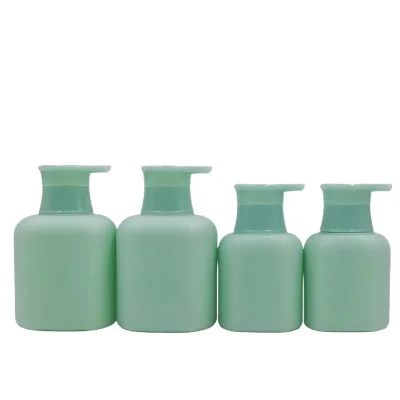


Wholesale Plastic HDPE 250ml Special-Shaped Lotion Bottle with Different Closures
$0.14 - $0.14
MOQ: 10000 Pieces


Wholesale Plastic LDPE 180ml 24/410 Round Shoulder Lotion Bottle with Lotion Pumps
$0.12 - $0.12
MOQ: 10000 Pieces


Wholesale Plastic PE 120ml 240ml Cosmetic Lotion Bottle with Disc-Top Cap
$0.11 - $0.11
MOQ: 10000 Pieces

Wholesale 246ml HDPE Plastic Shampoo Lotion Bottle with Different Kinds Pumps
$0.15 - $0.15
MOQ: 10000 Pieces


450ml High Quality Cylinder Shampoo/Lotion HDPE Pump Bottle with California 65
$0.01 - $0.50
MOQ: 10000 Pieces


Comprehensive Sourcing Guide
Strategic Sourcing Guide for HDPE Lotion Plastic Bottles
Understanding Material Properties and Functional Specifications
When sourcing HDPE (High-Density Polyethylene) lotion plastic bottles, buyers must first establish a clear understanding of the material's inherent characteristics and how they translate into functional performance. HDPE is widely recognized in the packaging industry for its excellent chemical resistance, high strength-to-density ratio, and moisture barrier properties. These attributes make it particularly suitable for containing emulsions, lotions, and personal care products that may contain oils, surfactants, or other active ingredients that could degrade lower-grade plastics. The observed product data indicates that the material is consistently identified as HDPE, with specific references to "Plastic Type: HDPE" and "Collar Material: Plastic," confirming the structural integrity required for pump dispensing systems.
The physical specifications of these bottles vary significantly based on the intended volume and application. The available data highlights a range of standard volumes, including 300ml, 500ml, and 750ml, with some references to a 1000ml standard. This variability suggests that buyers should not assume a single size fits all requirements but rather evaluate the specific volume needs of their product line. The thickness of the material is noted as 0.3 mm in specific listings, a critical parameter for determining the bottle's rigidity and resistance to crushing during shipping. Furthermore, the outer shape is not limited to a single form; observations include cylindrical, square, oval, and shaped bottle configurations. This diversity allows for significant brand differentiation, as the shape can be a primary element of shelf presence.
Sealing mechanisms are equally vital for HDPE lotion bottles. The data points to "Pump Sprayer" and "Lotion Pump" as the primary sealing types, with a specific sealing dimension of 24mm mentioned. This indicates that the neck finish must be compatible with standard pump actuators. Buyers must verify that the bottle's neck diameter matches the pump collar to prevent leakage or dispensing issues. Additionally, the surface handling capabilities, such as screen printing and treatments like glossy, matte, pearly luster, or gradient finishes, offer opportunities for branding. However, the data also notes that these specific products are "Transparent: No," implying an opaque finish which is standard for HDPE to protect light-sensitive contents.
Compliance, Certification, and Regulatory Verification
Navigating the regulatory landscape for cosmetic and personal care packaging requires rigorous verification of compliance standards. While the provided context mentions "ISO 9001" as a low-confidence background item, it is crucial to treat this as a potential area for verification rather than a guaranteed attribute of every supplier. Buyers should not assume that a supplier possesses specific certifications based solely on general market knowledge; instead, they must request current, valid certificates from the specific manufacturer. The absence of explicit certification data in the high-confidence facts means that the procurement strategy must include a mandatory audit or document request phase to confirm adherence to international quality management systems.
Regulatory compliance extends beyond general quality management to specific material safety standards. Since HDPE is used for products applied to the skin, such as lotions and emulsions, the material must be free from harmful substances that could leach into the product. Buyers should verify that the HDPE resin used meets food-grade or cosmetic-grade standards, even if the specific standard number is not listed in the product description. The "Standard Export Packaging" noted in the data suggests that the supplier is aware of international shipping requirements, but this does not automatically equate to compliance with destination-specific regulations, such as those in the European Union or the United States.
It is also important to distinguish between the packaging material's compliance and the finished product's compliance. The bottle itself must be inert and non-reactive, but the ink used for screen printing or the adhesive used for labels must also be safe for cosmetic contact. The data mentions "Surface Handling: Screen Printing," which introduces a potential risk point. Buyers must ensure that the inks used for customization are non-toxic and compliant with relevant cosmetic packaging regulations. Without explicit confirmation of ink safety in the provided facts, the procurement process must include a request for Safety Data Sheets (SDS) for all printing materials and a declaration of conformity for the HDPE resin.
Cost Drivers and Pricing Structure Analysis
The pricing structure for HDPE lotion bottles is influenced by a complex interplay of factors, including material costs, customization levels, order volume, and logistical requirements. The observed price range in the data spans from $0.01 to $50,000, which represents a vast spectrum likely covering single samples to bulk container loads. This wide range underscores the importance of defining the exact scope of the inquiry before requesting quotes. A single unit or a small sample batch will have a significantly higher unit cost compared to a large-scale production run, due to the amortization of setup costs for molding and printing.
Order Volume is a primary driver of cost efficiency. The data indicates an MOQ (Minimum Order Quantity) of 10,000 pieces for certain listings, while other observations show a range from 1 to 30,000 pieces. This variability suggests that suppliers have different thresholds for production runs. Buyers seeking to minimize upfront capital expenditure may find suppliers with lower MOQs, though they should expect a higher per-unit price. Conversely, buyers with high volume requirements can leverage economies of scale to reduce the unit cost significantly. The "Selling Units: Single item" attribute in the data further highlights that sample orders are possible, but these are typically for evaluation purposes and not for cost-effective procurement.
Customization is another significant cost factor. The data confirms that "Customization: Available" and "OEM/ODM: Yes" are standard offerings. However, customizing the mold, the color (e.g., "Mint"), or the surface treatment (e.g., "Gradient") incurs additional tooling and setup fees. These one-time costs are often amortized over the production run, making them less impactful for large orders but critical for small batches. Additionally, the "Lead Time: 25-30 Days" noted in the data implies that expedited shipping or rush orders may carry a premium. Buyers should factor in the time value of money and potential stockout risks when evaluating the total cost of ownership, rather than focusing solely on the unit price.
Typical Applications and Market Segmentation
HDPE lotion plastic bottles serve a diverse range of applications within the personal care and chemical industries. The observed usage data explicitly lists "Skin Care," "Cosmetics," "Personal Care Product," "Shampoo Bottle," and "Chemical" applications. This versatility stems from the material's ability to resist a wide array of chemicals while maintaining structural integrity. For skin care products, the opaque nature of HDPE protects light-sensitive ingredients like vitamins and retinoids from degradation. The "Container for Emulsion" specification further confirms its suitability for the thick, viscous formulations common in moisturizers and body lotions.
The market segmentation for these bottles is driven by the specific needs of different product categories. In the cosmetics sector, the aesthetic appeal is paramount, leading to a demand for various shapes (cylindrical, square, oval) and surface finishes (glossy, matte, pearly). The "High Quality" style attribute suggests that premium brands are a key target market for these suppliers. In the chemical and industrial sectors, the focus shifts to durability and chemical resistance, where the "HDPE" material's robustness is the primary selling point. The "24mm" sealing dimension indicates a standardization that allows for compatibility with a wide range of pump mechanisms, facilitating its use in both consumer and industrial applications.
The "Single gross weight: 0.100 kg" provides insight into the logistical considerations for these products. The lightweight nature of HDPE bottles reduces shipping costs and carbon footprint compared to glass or heavier plastics. This makes them an attractive option for global supply chains where freight costs are a significant portion of the total product cost. The "Carton" and "Standard Carton" packing methods further support efficient stacking and storage in warehouses, optimizing space utilization for both the supplier and the buyer.
Supplier Evaluation and Geographic Considerations
Evaluating suppliers for HDPE lotion bottles requires a careful assessment of their geographic location, production capacity, and reliability. The data reveals a concentration of suppliers in China, with specific origins listed as "Jiangsu," "Zhejiang," and "Guangzhou." These regions are known for their robust manufacturing ecosystems and specialized plastic processing industries. However, the presence of multiple locations suggests that buyers should not assume uniform quality or service levels across all suppliers in these regions. Each factory may have different capabilities regarding mold design, printing technology, and quality control processes.
The "Lead Time: 25-30 Days" is a critical metric for supply chain planning. Buyers must evaluate whether this timeline aligns with their production schedules and inventory requirements. A longer lead time may necessitate higher safety stock levels, increasing working capital requirements. Conversely, a shorter lead time could indicate a more agile supplier capable of responding to market fluctuations. The "Sample: Free Available" and "Sample: 1-5pcs" attributes indicate that suppliers are generally willing to provide samples for evaluation, which is a positive sign for due diligence. However, buyers should verify the sample quality against the final production standard, as samples are sometimes produced under ideal conditions that may not reflect mass production consistency.
When evaluating suppliers, buyers should also consider the "OEM/ODM: Yes" capability. This indicates that the supplier can offer design and manufacturing services, which is essential for brands looking to differentiate their products. However, the extent of this capability varies; some suppliers may only offer minor modifications, while others can provide full custom mold development. Buyers should request case studies or references to verify the supplier's ability to handle complex customization requests. Additionally, the "Standard Export Packaging" suggests that the supplier is experienced in international logistics, but buyers should still confirm the packaging standards to ensure product protection during transit.
Quality Control and Long-Term Procurement Strategies
Establishing a robust quality control (QC) framework is essential for ensuring the consistency and reliability of HDPE lotion bottles. Given the variability in observed specifications, such as different models (e.g., "HS-E125," "WPJ-041," "WP-469," "WPA-558") and standards, buyers must implement a rigorous inspection protocol. This should include checks for dimensional accuracy, particularly the neck finish and sealing dimensions, to ensure compatibility with pumps. Visual inspections for surface defects, such as scratches, discoloration, or uneven printing, are also critical, especially for high-end cosmetic applications where aesthetics are paramount.
The "Thickness: 0.3 mm" specification highlights the need for verification of material density and wall uniformity. Inconsistent wall thickness can lead to weak points in the bottle, resulting in leakage or breakage during handling. Buyers should consider implementing a third-party inspection service for the first few production batches to validate the supplier's QC processes. This is particularly important given the lack of explicit certification data in the provided facts. Establishing a clear quality agreement that defines acceptable defect rates and inspection methods is a vital step in mitigating risk.
Long-term procurement strategies should focus on building a resilient supply chain. This involves diversifying suppliers to avoid dependency on a single source, especially given the geographic concentration in China. Buyers should also consider the scalability of their suppliers; as demand grows, the supplier must be able to increase production without compromising quality or lead times. The "Customization: Available" feature offers a strategic advantage, allowing buyers to adapt their packaging to changing market trends or regulatory requirements. However, maintaining a stable relationship with the supplier is crucial for ensuring consistent access to custom molds and printing capabilities.
Finally, buyers should monitor the "Lead Time" and "MOQ" trends over time. Changes in these parameters can signal shifts in the supplier's capacity or market conditions. By maintaining open communication and regularly reviewing performance metrics, buyers can proactively address potential issues and ensure a steady supply of high-quality HDPE lotion bottles. The combination of technical expertise, rigorous quality control, and strategic supplier management will enable buyers to navigate the complexities of the HDPE packaging market effectively.
FAQs
What volume options are available for these HDPE bottles?
The available volumes include 300ml, 500ml, and 750ml, with some listings referencing a 1000ml standard. Buyers should verify the specific model number to confirm the exact capacity required for their emulsion or lotion products.
Can I order samples before placing a bulk order?
Yes, free samples are available, typically ranging from 1 to 5 pieces per request. This allows buyers to evaluate the mint color, cylindrical or square shape, and pump compatibility before committing to the minimum order quantity.
What is the minimum order quantity for these plastic bottles?
The minimum order quantity is 10,000 pieces for standard production runs, though some listings show a range from 1 to 30,000 pieces. Buyers must confirm the specific supplier threshold as it varies by manufacturer and customization level.
How long does it take to receive an order?
The standard lead time is 25 to 30 days from order confirmation. This duration accounts for production, screen printing, and standard export packaging, so buyers should plan their inventory replenishment accordingly.
Which surface finishes can be applied to these bottles?
Surface treatments include glossy, matte, pearly luster, and gradient finishes applied via screen printing. The bottles are opaque with no transparency, which helps protect light-sensitive contents like emulsions and personal care products.
Are OEM and ODM services available for customization?
Yes, OEM and ODM services are available for customizing shapes, colors, and printing designs. Buyers can request specific outer shapes like cylindrical, square, or oval, along with custom branding on the 24mm sealing neck.
What is the material composition of these lotion bottles?
The bottles are made of High-Density Polyethylene (HDPE) with a plastic collar material. This material offers excellent chemical resistance and is suitable for containing cosmetics, shampoos, and various personal care products.